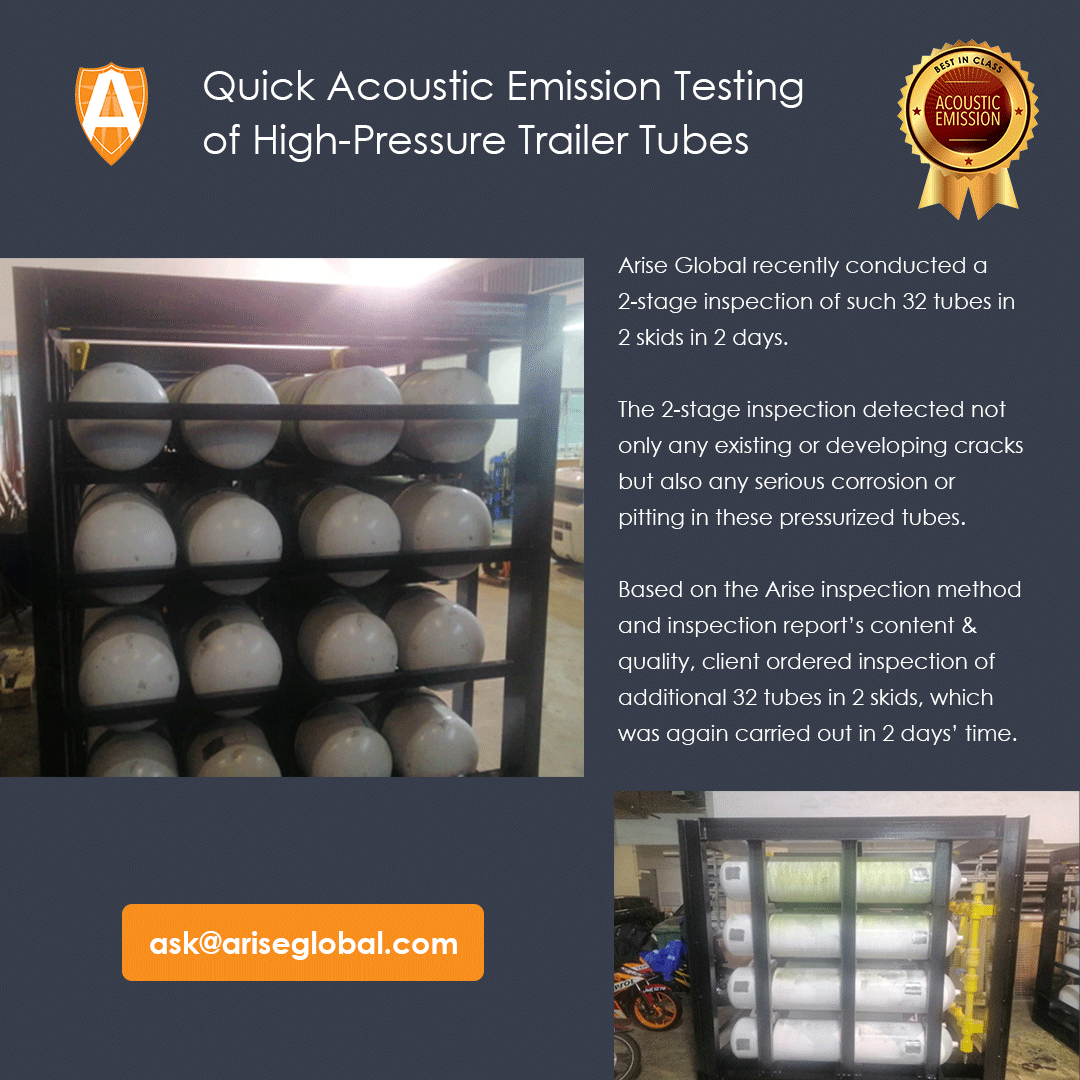
Arise Global recently conducted a 2-stage inspection of such 32 tubes in 2 skids in 2 days. The 2-stage inspection detected not only any existing or developing cracks but also any serious corrosion or pitting in these pressurized tubes. Based on the Arise inspection method and inspection report’s content & quality, client ordered inspection of additional 32 tubes in 2 skids, which was again carried out in 2 days’ time.
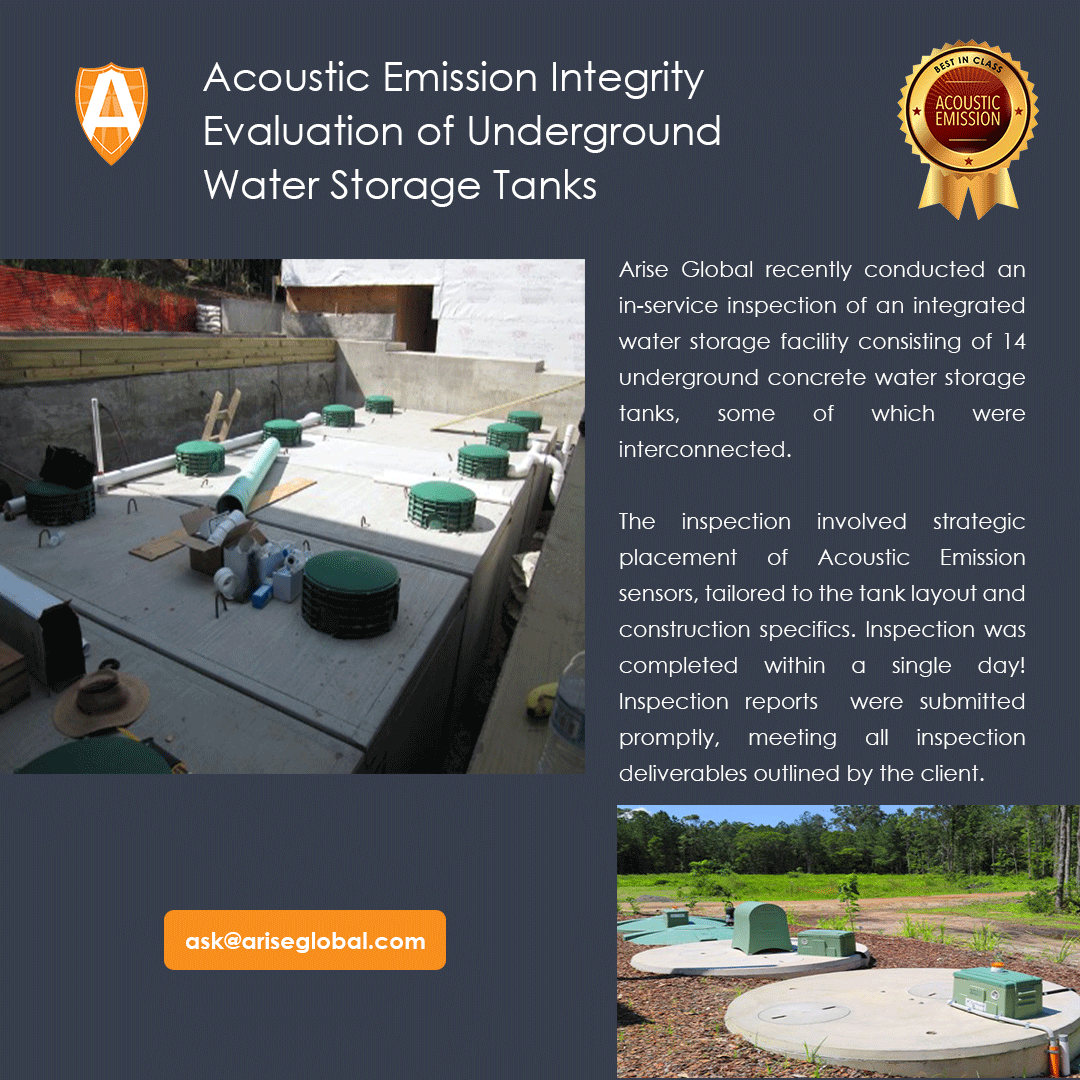
Regular evaluation of underground domestic and commercial water storage tanks is essential to identify potential leakages and cracks. This process ensures a safe and uncontaminated water supply for public/ commercial consumption while safeguarding the integrity of the water supply infrastructure.
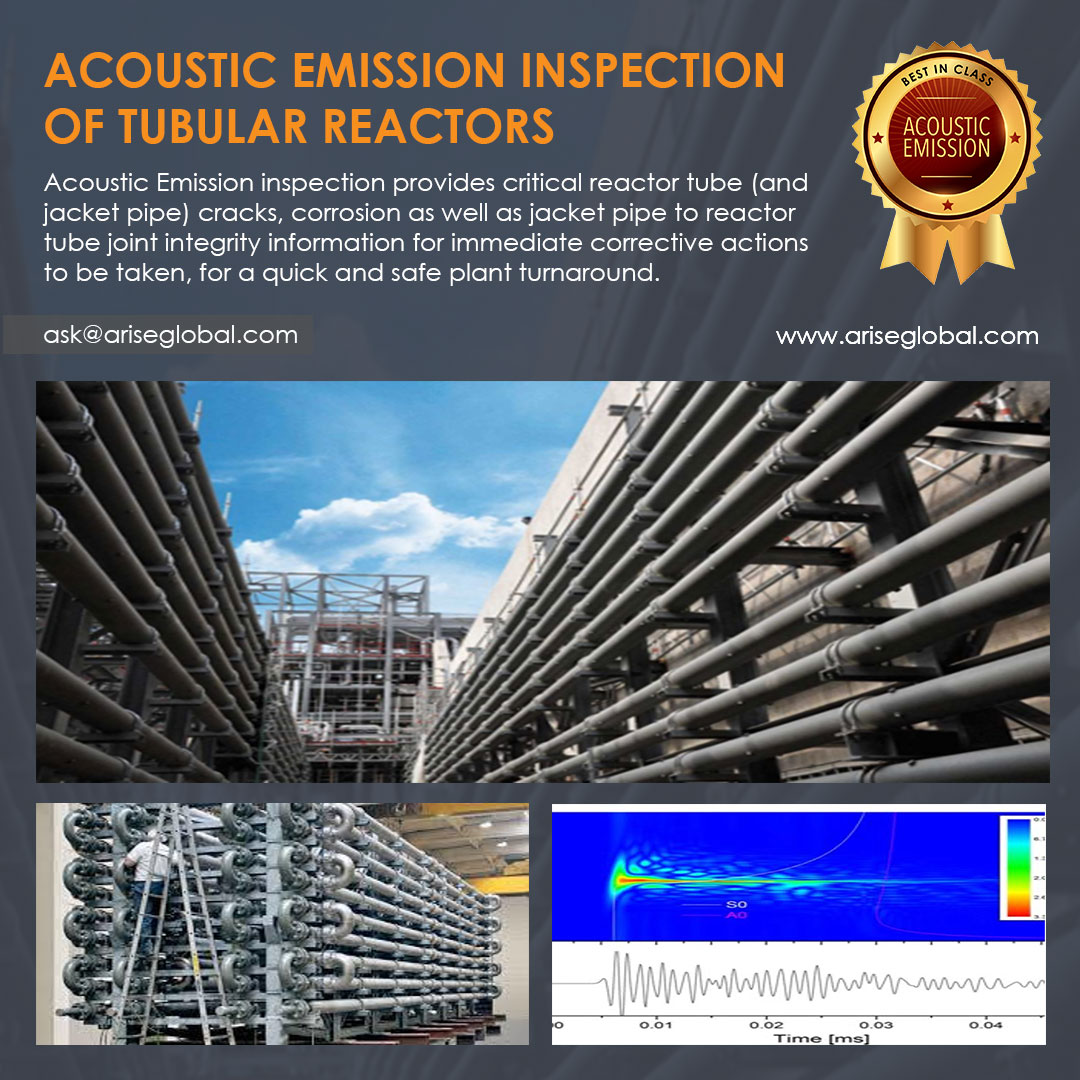
Many tubular reactors operate on extremely high pressures and high temperatures. Integrity of these high energy reactor tubes as well as of cooling jacket pipes, is of critical concern for plant operators for safety of O&M personnel as well as of plant assets.
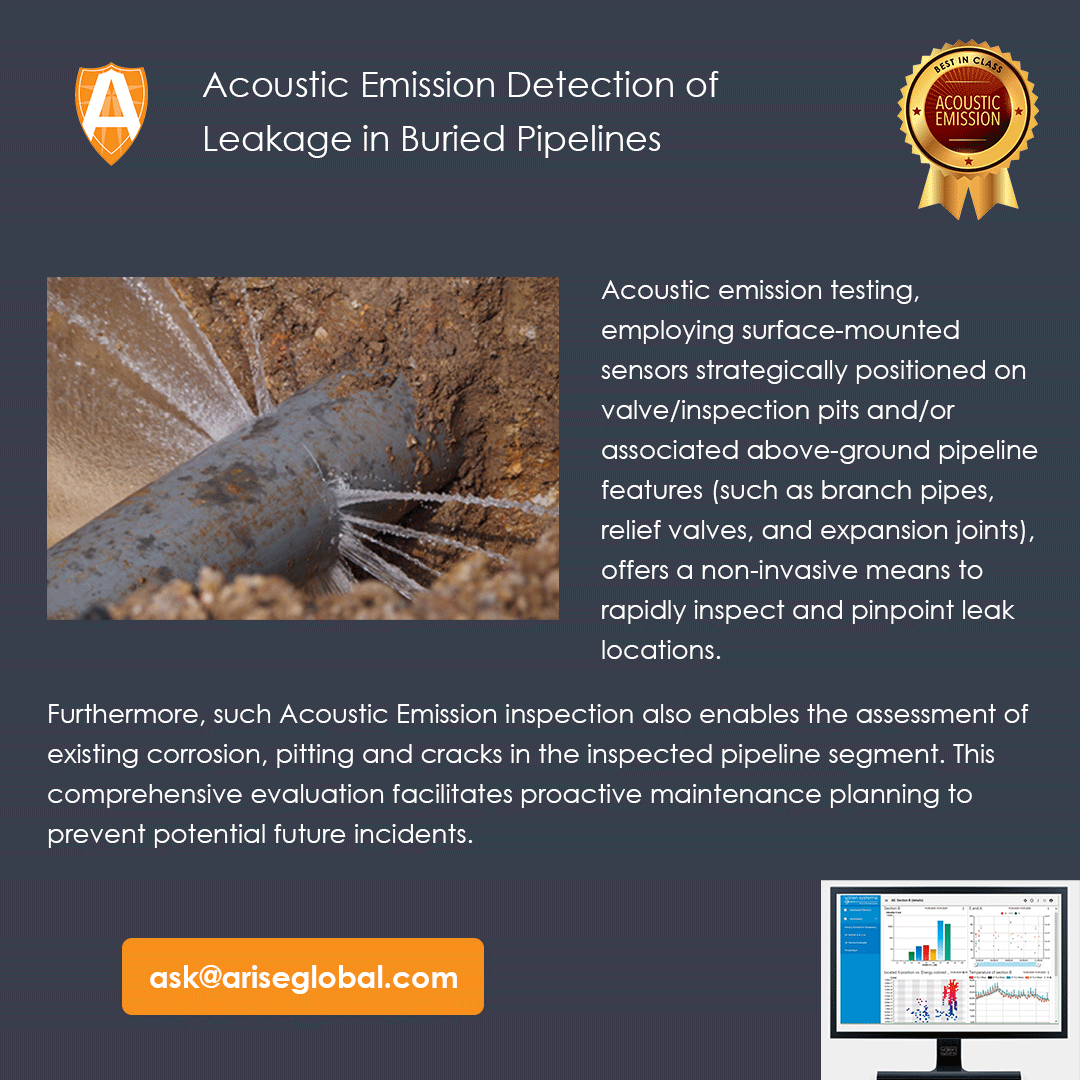
Acoustic emission testing can provide quick screening of a suspected pipeline section to pinpoint leak location/s. In addition, Acoustic Emission inspection can also provide asset integrity evaluation of existing corrosion, pitting and crack defects in the pipeline, which can then help facilitate pro-active maintenance to safeguard the buried pipeline segment from future incidents.
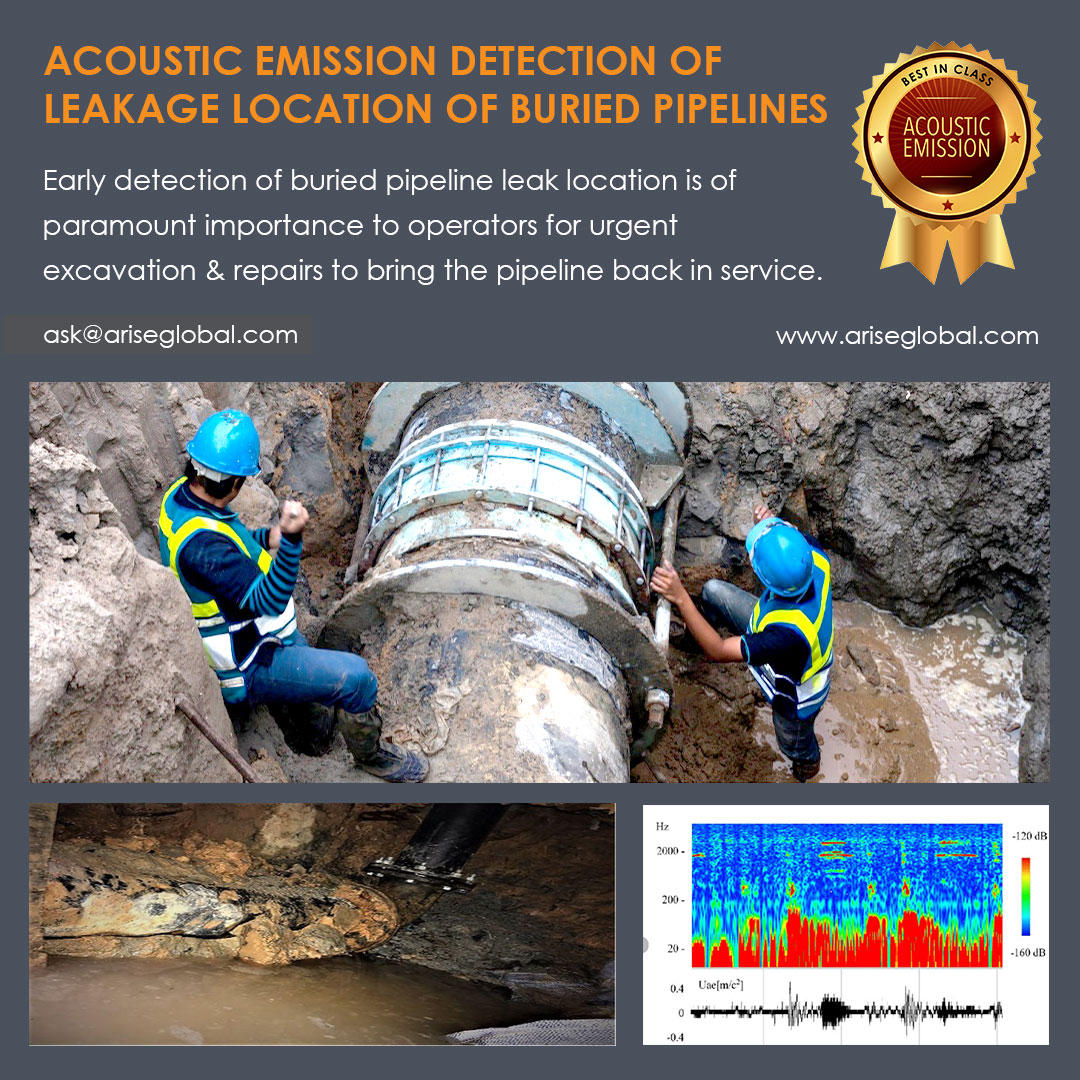
Acoustic emission testing can provide a quick non-invasive screening of buried pipeline, to pinpoint the leak location/s. Sensors are mounted on above ground pipeline features and valve/inspection pits. In addition, Acoustic Emission inspection can also provide defect detection at stress points of pipeline (e.g., bends, branching, other joints) for developing fiber-matrix cracking, debonding, delamination etc. This will help provide a basis for future preventive & predictive maintenance decisions.

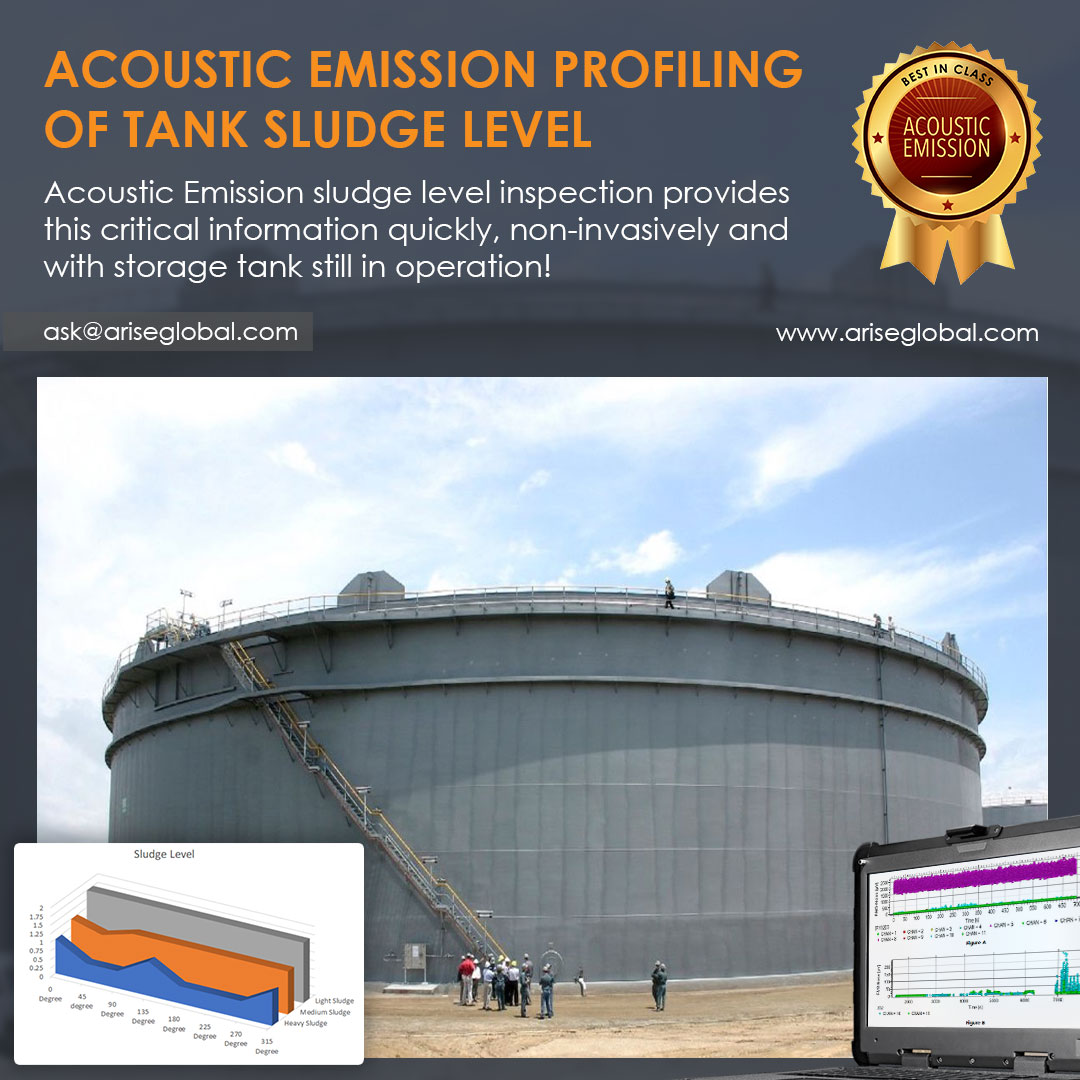
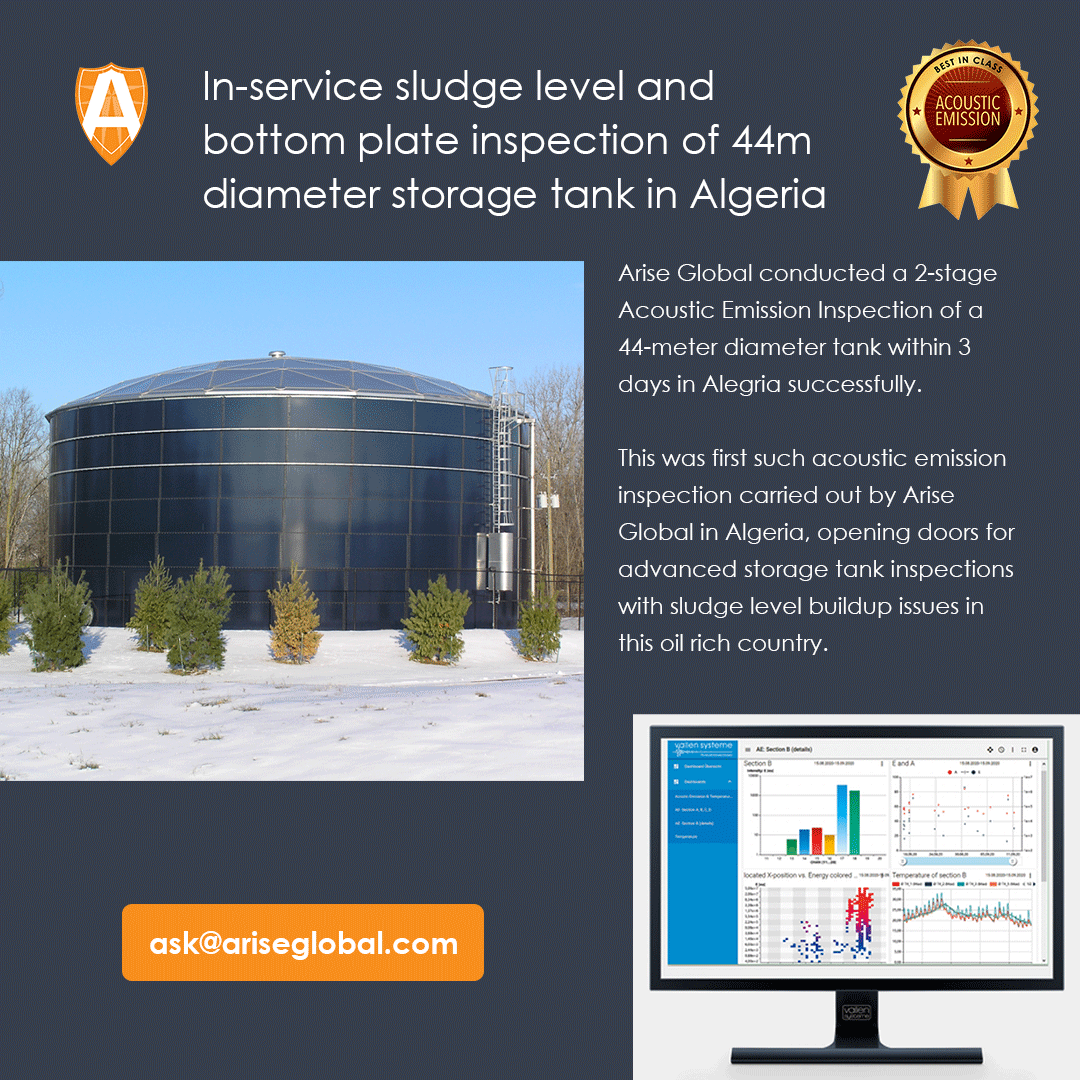
Sludge level monitoring for Large Crude/HFO storage tanks is important to plant operators for tank storage capacity/inventory estimation. It is also a critical pre-requisite to mount acoustic emission sensors above sludge level for accurate tank bottom integrity evaluation.
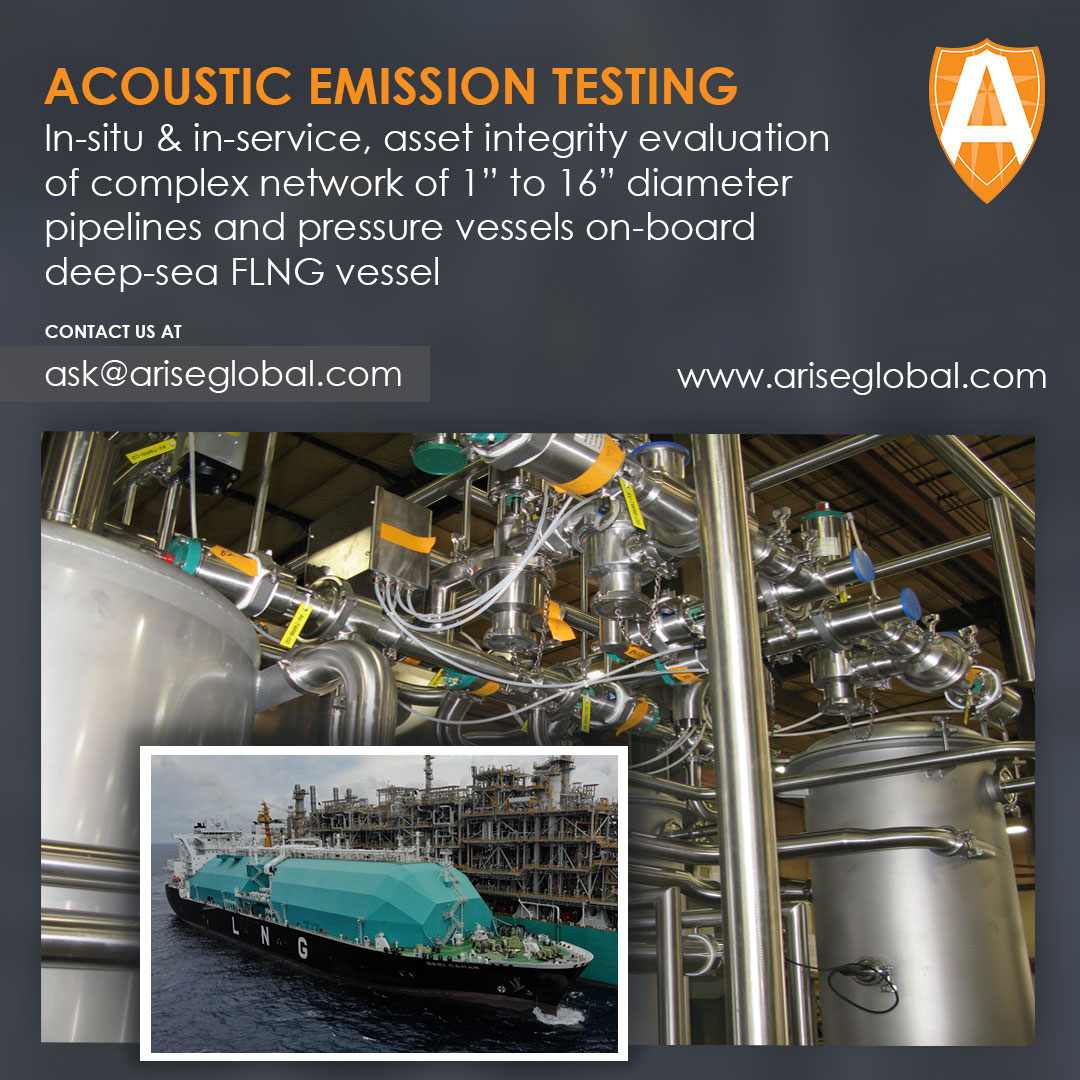
Offshore Oil & gas installations are complex & compact and give very little flexibility or room to inspecting personnel, especially during normal operations. Critical segments of the pipeline, many times, are also inaccessible, have high temperature, noise and vibrations. Acoustic emission technology allows for quick, clean & efficient on-board & in-service inspection of critical mechanical equipment for detection of existing and onset of defects like corrosion, leakage and cracks, for such deep-sea assets.
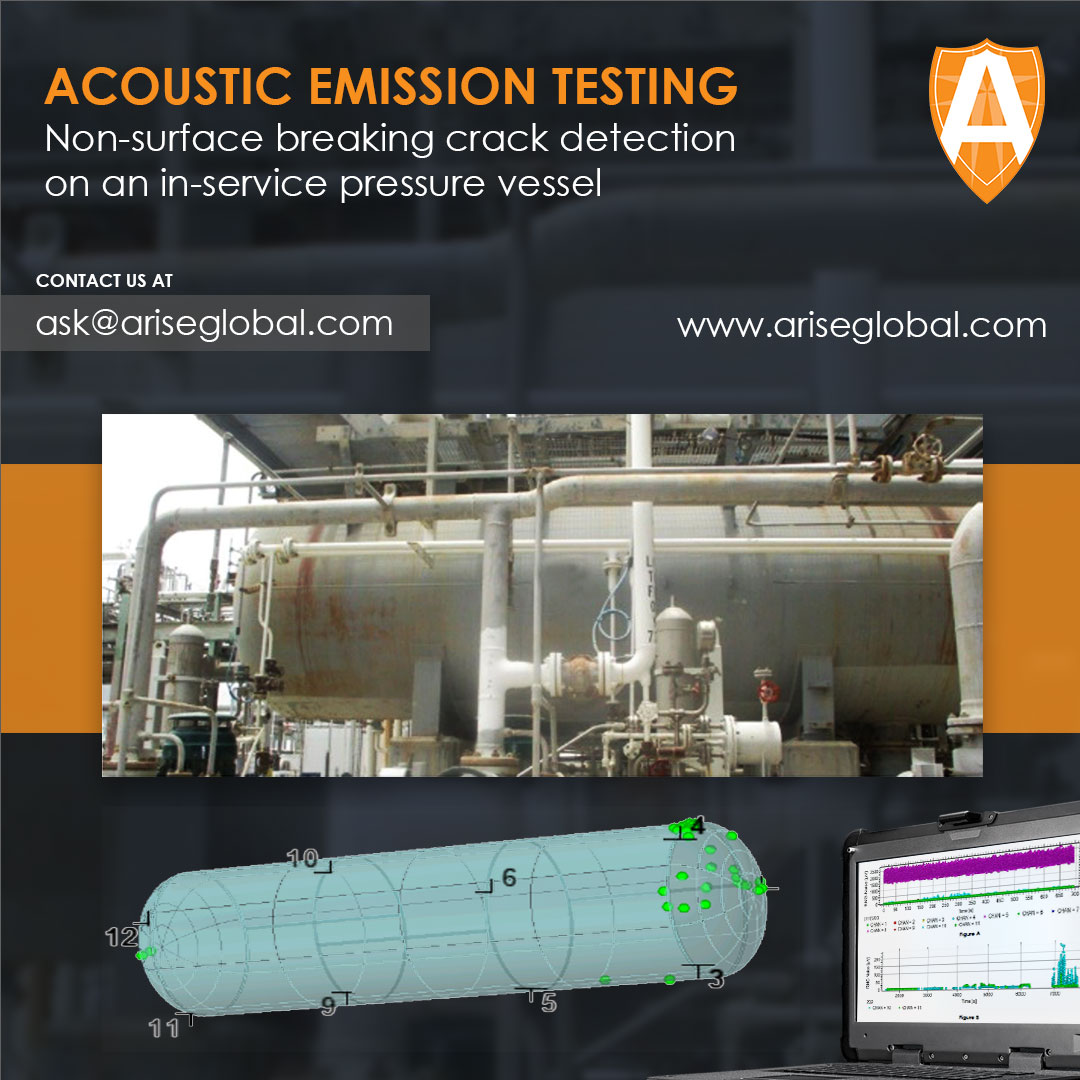
Arise Global engineers have accomplished a remarkable feat by completing the non-invasive, in-service acoustic emission inspection of 24 storage tank bottom plates at a large onshore oil production complex within 45 days.

Many fuel distribution tank farms near major consumption centres manage aging storage tanks, necessitating stringent integrity assessments to ensure the safety of operations and maintenance personnel, the surrounding community, and environmental compliance.
Through its local operations, Arise Global has been conducting acoustic emission inspections on such tanks for a prominent Southeast Asian Oil & Gas conglomerate at their fuel terminals.

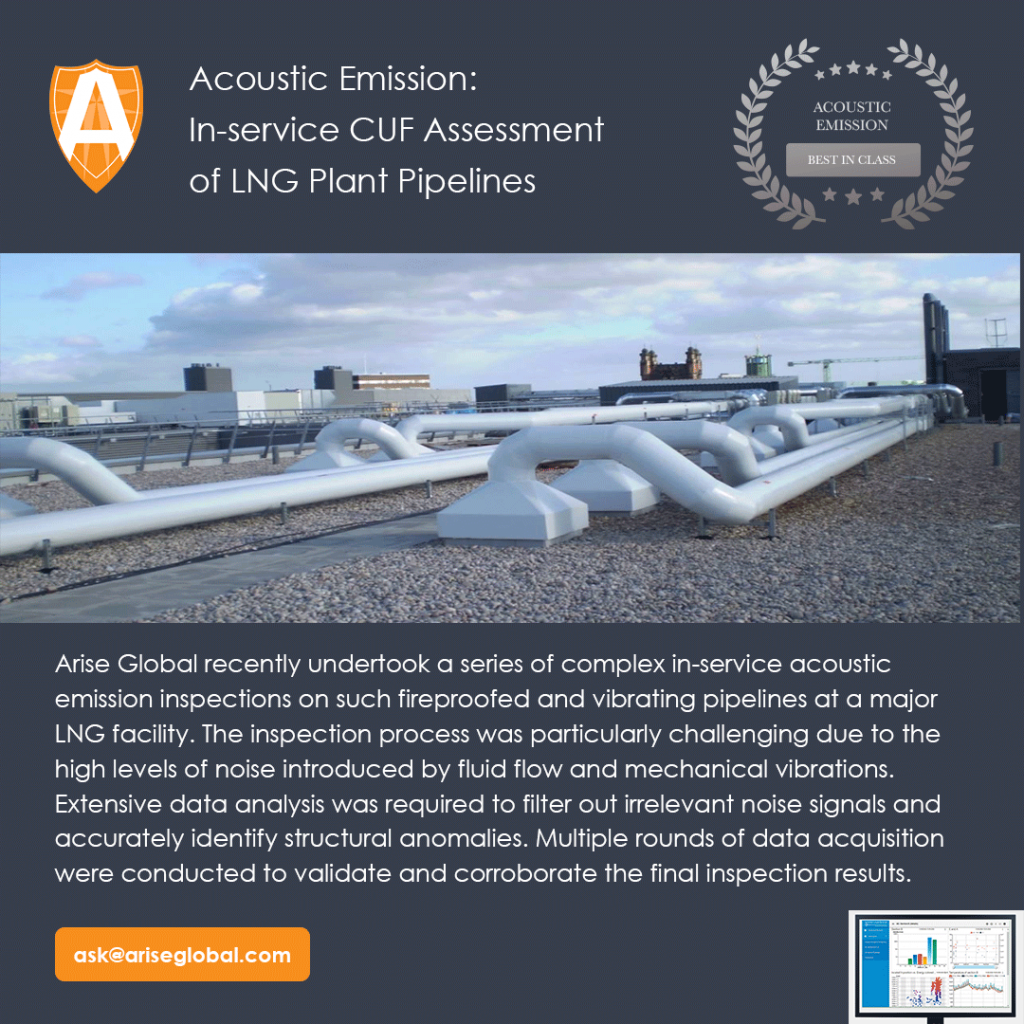
Large LNG facilities feature extensive and complex pipeline networks that transport fluids under a wide range of conditions—from subzero temperatures to high-temperature, high-pressure environments. These pipelines are often protected by partial to full fireproofing and may also have cladded insulation.
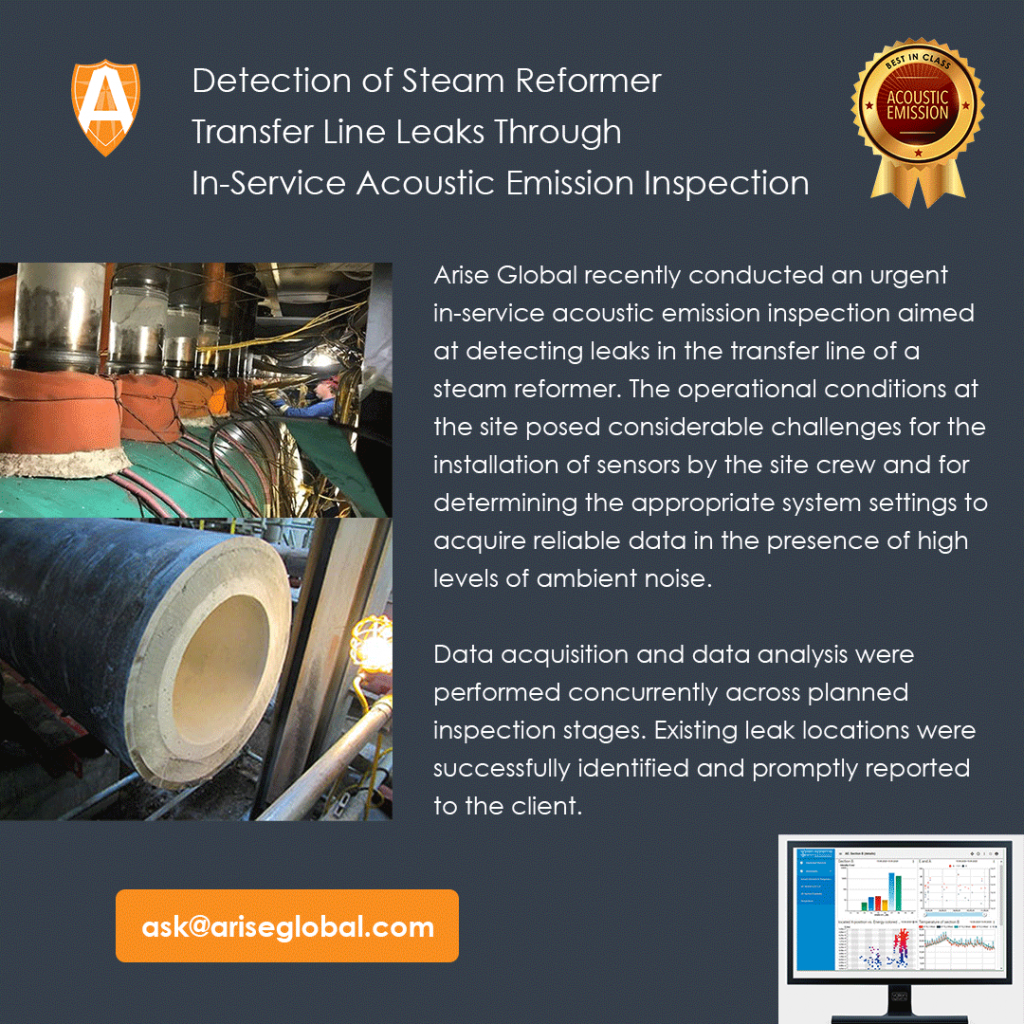
In older-generation LNG plants, ambient temperature fluctuations can significantly impact plant performance, causing notable variations in pipelines pressure. Additionally, pipeline networks connected to high-capacity heat exchangers are subject to continuous vibration. This vibration can compromise the integrity of the fireproofing system, allowing moisture ingress, leading to corrosion, pitting and leakages.
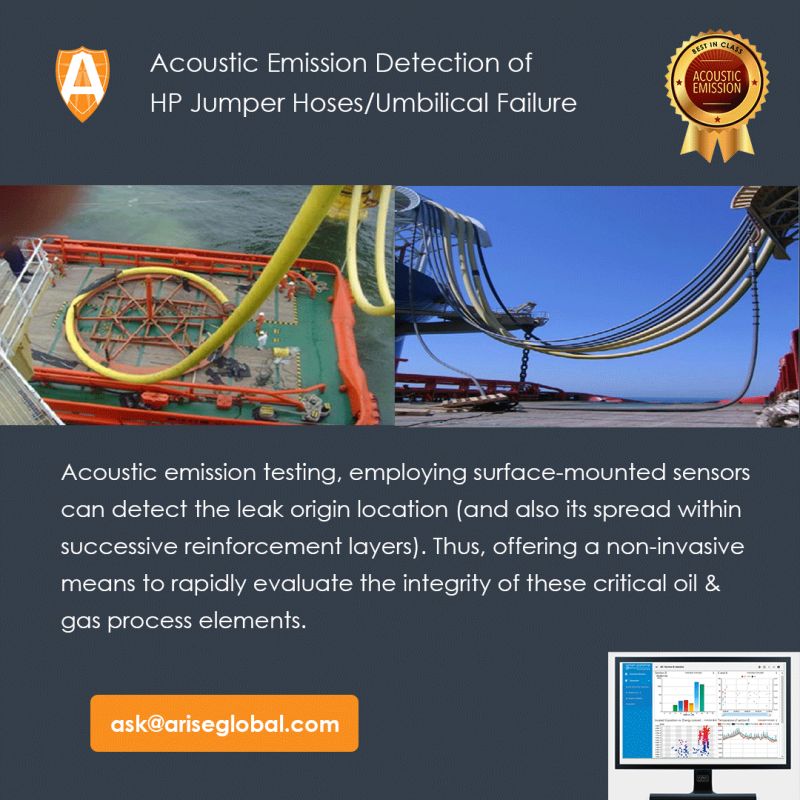
Recently, Arise successfully completed an offshore acoustic emission inspection of three high-pressure jumper hoses connected to flowlines from three subsea wells. The inspections were conducted during live flowline operations, with each jumper hose assessed within a single day—despite challenging offshore conditions characterized by vibration and high ambient noise levels.
A substantial volume of inspection data was collected and carefully analyzed. Advanced filtering techniques were applied to isolate relevant defect signals from background noise, ensuring accurate and actionable reporting in line with client requirements.

DRI (direct reduced iron) or Sponge Iron is produced from iron oxide pellets/lump ore by direct reduction furnace operating at extremely hot temperatures (800 to 1200 °C). The product is then cooled down and sent as feed to electric arc furnace for steel making.
DRI product leg is heavily insulated and with thick steel cladding, before DRI enters the cooling stage of the process. The semi solid, hot temperature flow of DRI thru DRI leg presents serious challenge to integrity of the DRI leg and it is critical to monitor development of any cracks for safe operations and safety of plant personnel.

Buried firewater pipelines form the backbone of industrial safety systems, yet assessing their integrity has always been a challenge. Traditional methods often involve disruptive and costly excavations, with no guarantee of success.
At Arise, we provide a smarter alternative. Our team recently supported a petroleum tank farm where operators were concerned about falling water pressure in their firewater system. A major leak was suspected in a buried pipeline section, but its location was unknown.

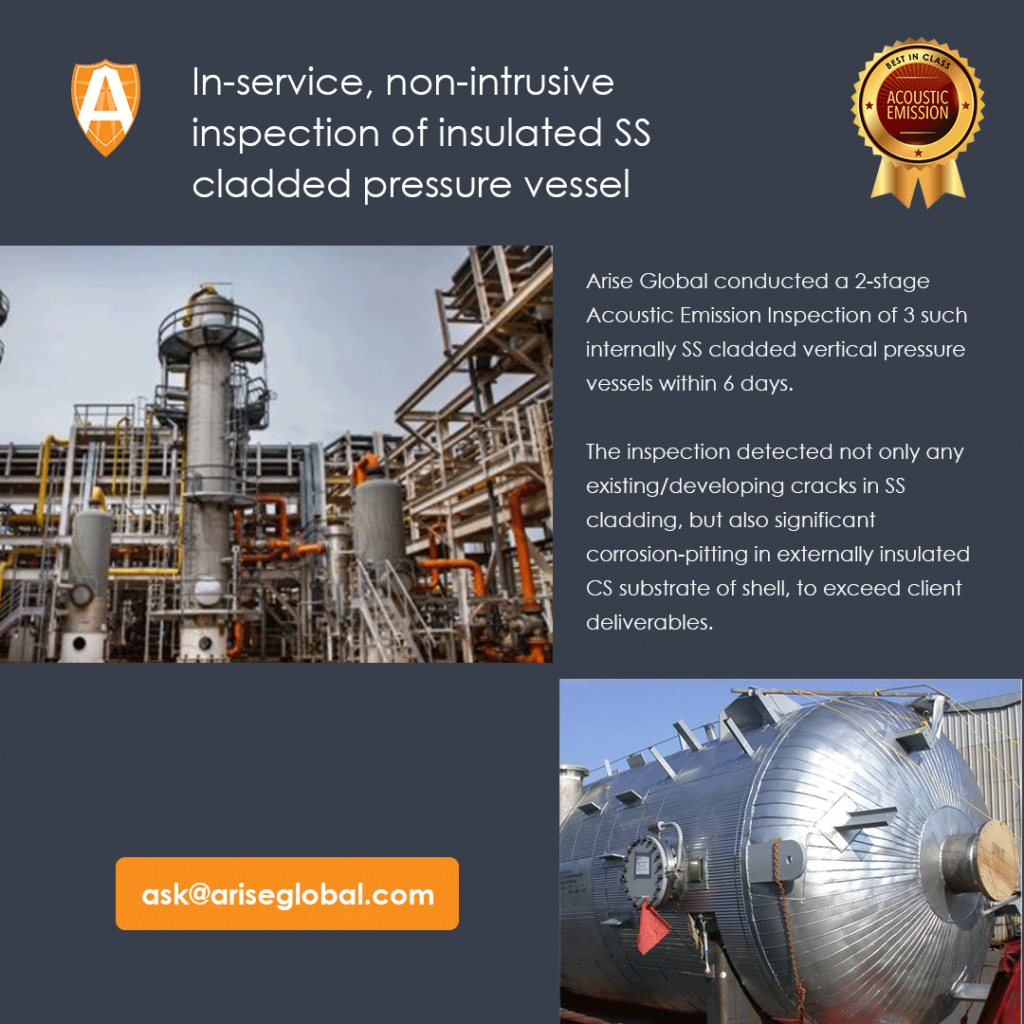
In-service inspection of mounded LPG bullets for un-interrupted operations, presents a major operational and maintenance challenge to plant operators. These buried LPG bullets can be >50-meters in length and several meters in diameter!
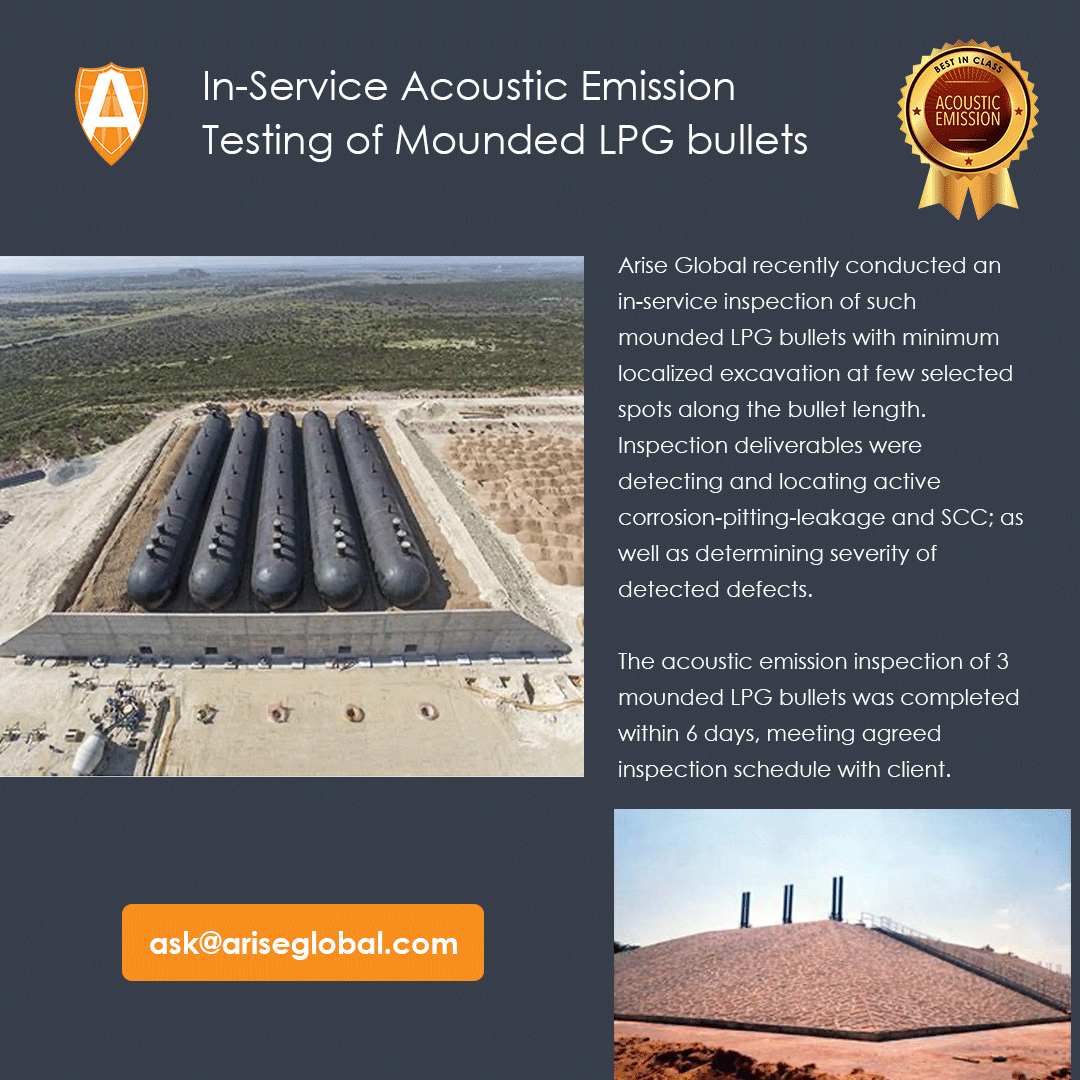
There are many challenges to in-service & non-invasive integrity evaluation of insulated pipelines. These include insulation liftoff, pipe material, wire mesh, pipeline attachments etc. which significantly affect efficacy & accuracy of online CUI evaluation. Furthermore, critical defects like cracks, through wall holes & localized pitting, remain undetected.
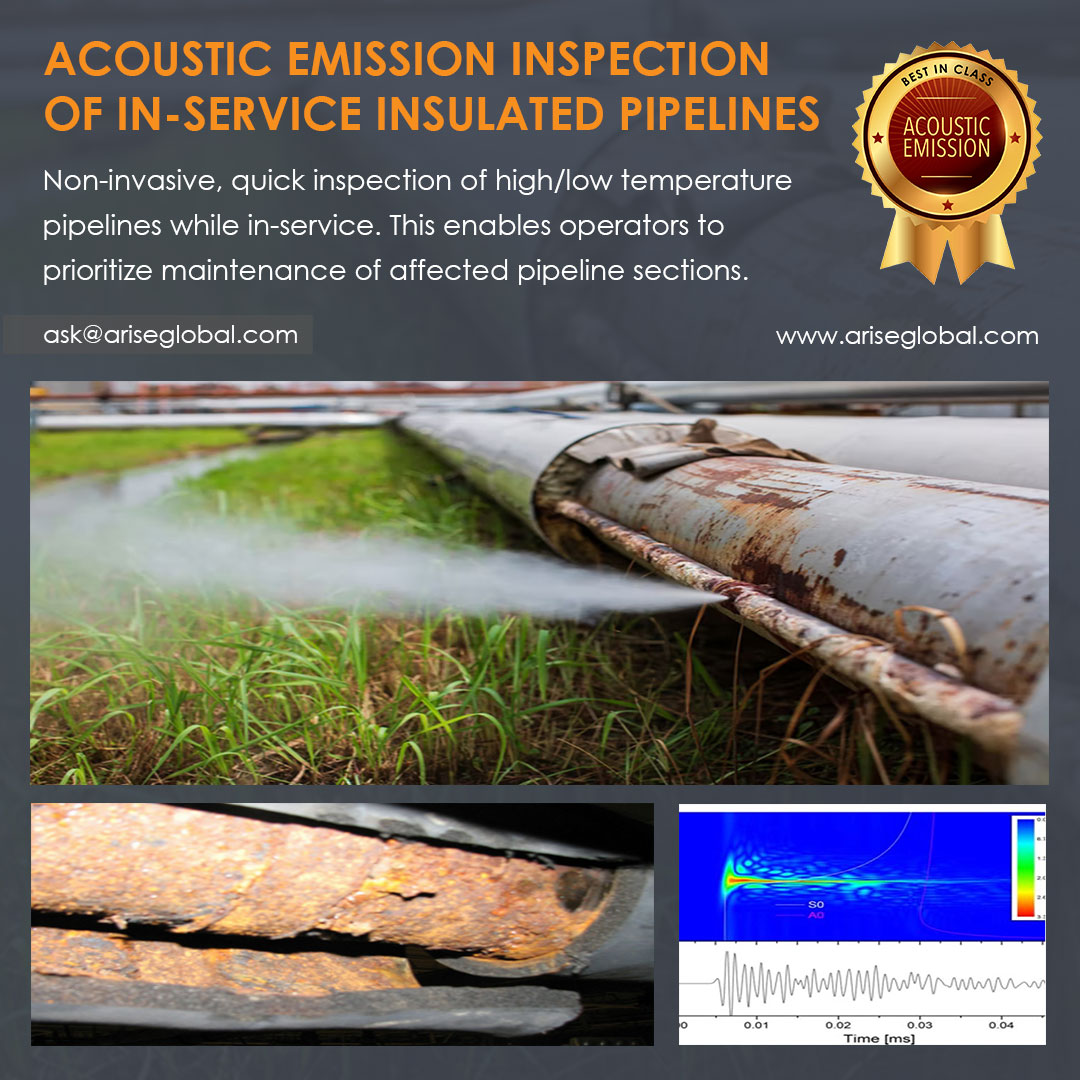
Bottom Shell course of a storage tank are welded to annular plate, both from inside and outside of tank. Detecting cracks in these critical inner & outside continuous fillet welds (also called Zero Weld), is a very challenging task, especially when the tank is still in operation.
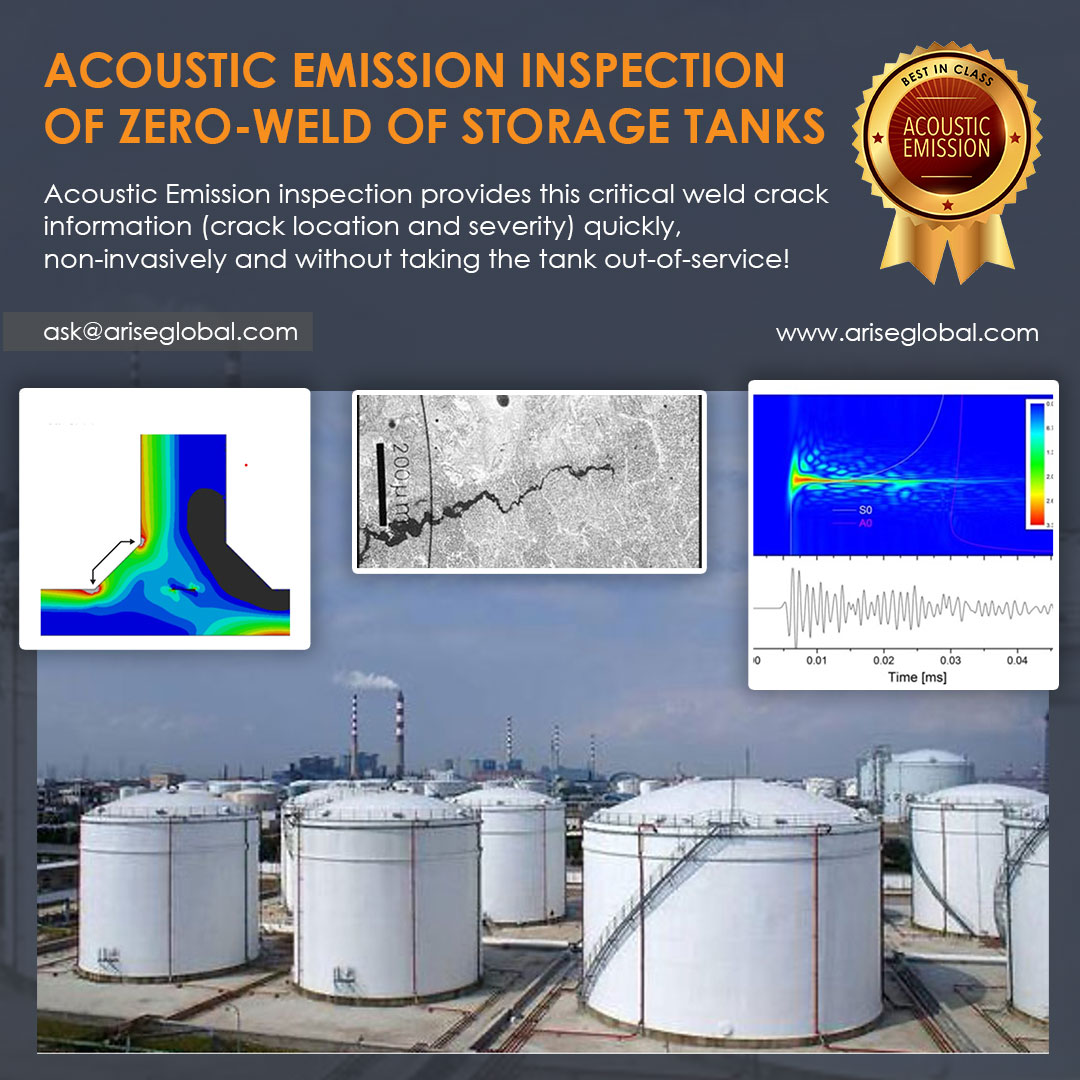
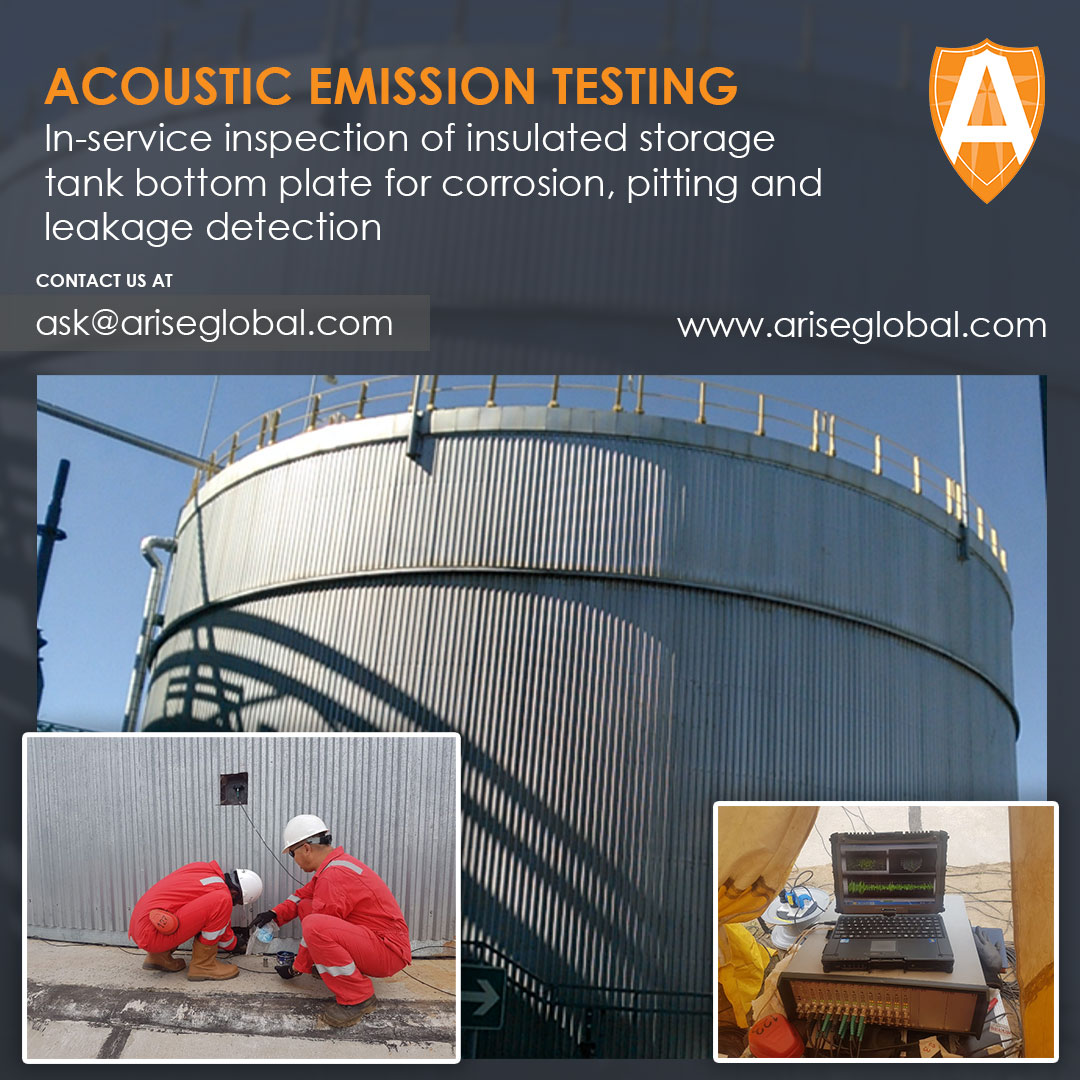
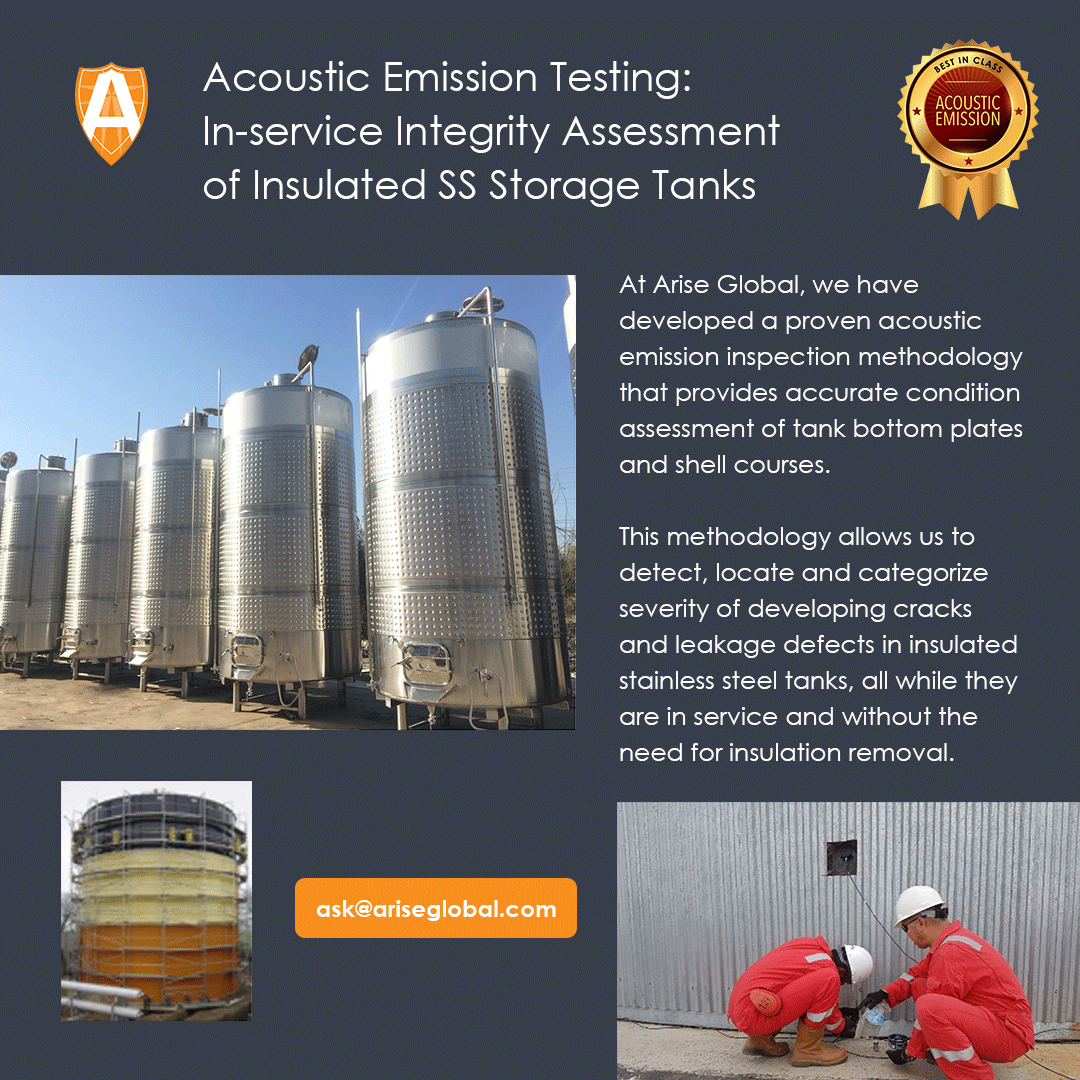
Insulated above ground storage tanks present a difficult blind scenario for bottom plate and insulated shell courses integrity evaluation. Off service internal & external inspections are expensive, tedious, of prolonged duration and affect plant operations & product logistics significantly. Acoustic emission technology allows for quick, clean & efficient in-service inspection of such insulated assets for detection of existing and growing defects like corrosion, leakage and crack.
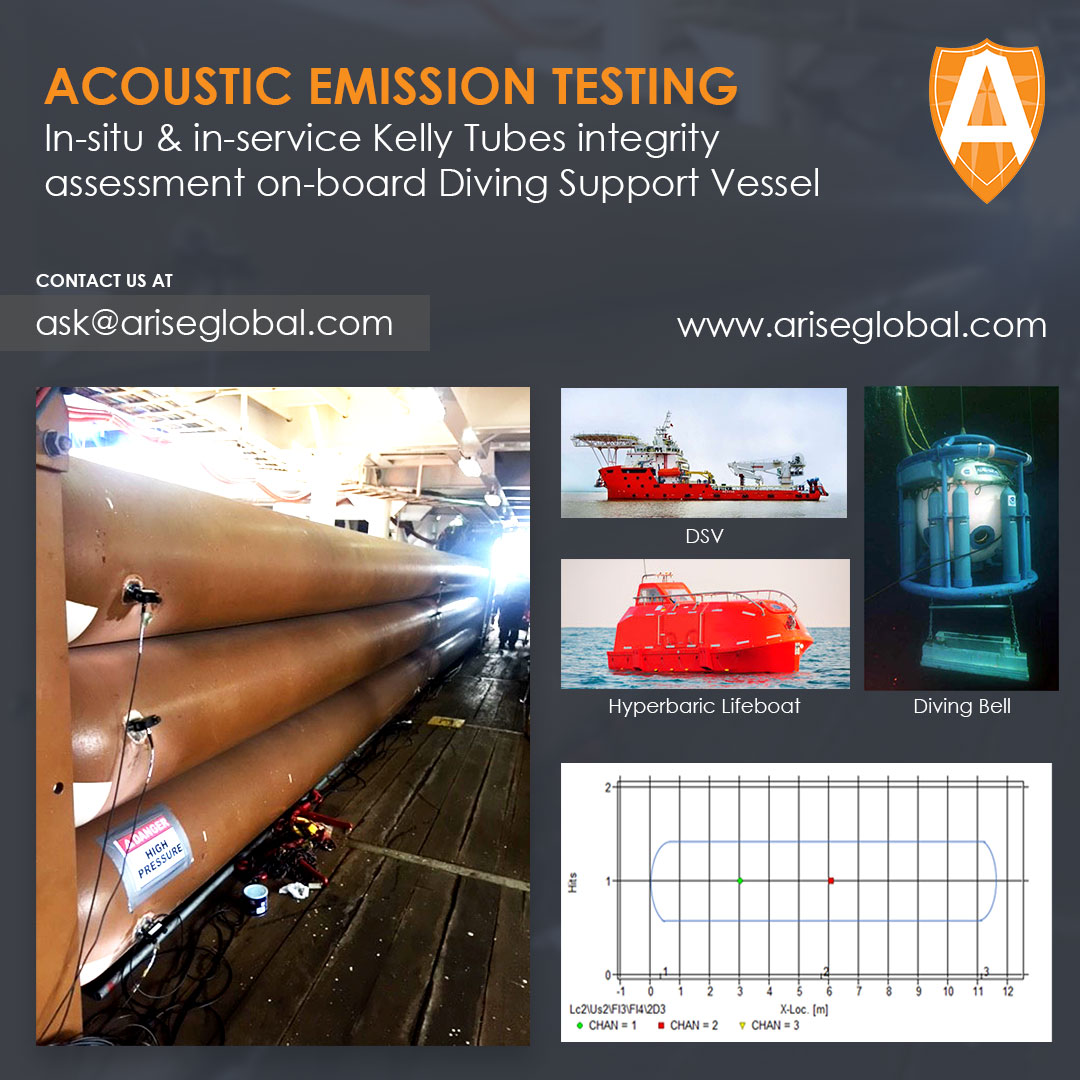
Integrity of breathing air tubes & cylinders is critical for safety of divers of DSV, Diving Bells and evacuees of Hyperbaric Lifeboats. Acceptance of acoustic emission technology by class societies, opens door for quick, clean & efficient on-board inspection of pressurised Kelly Tubes and cylinders for corrosion and cracking.
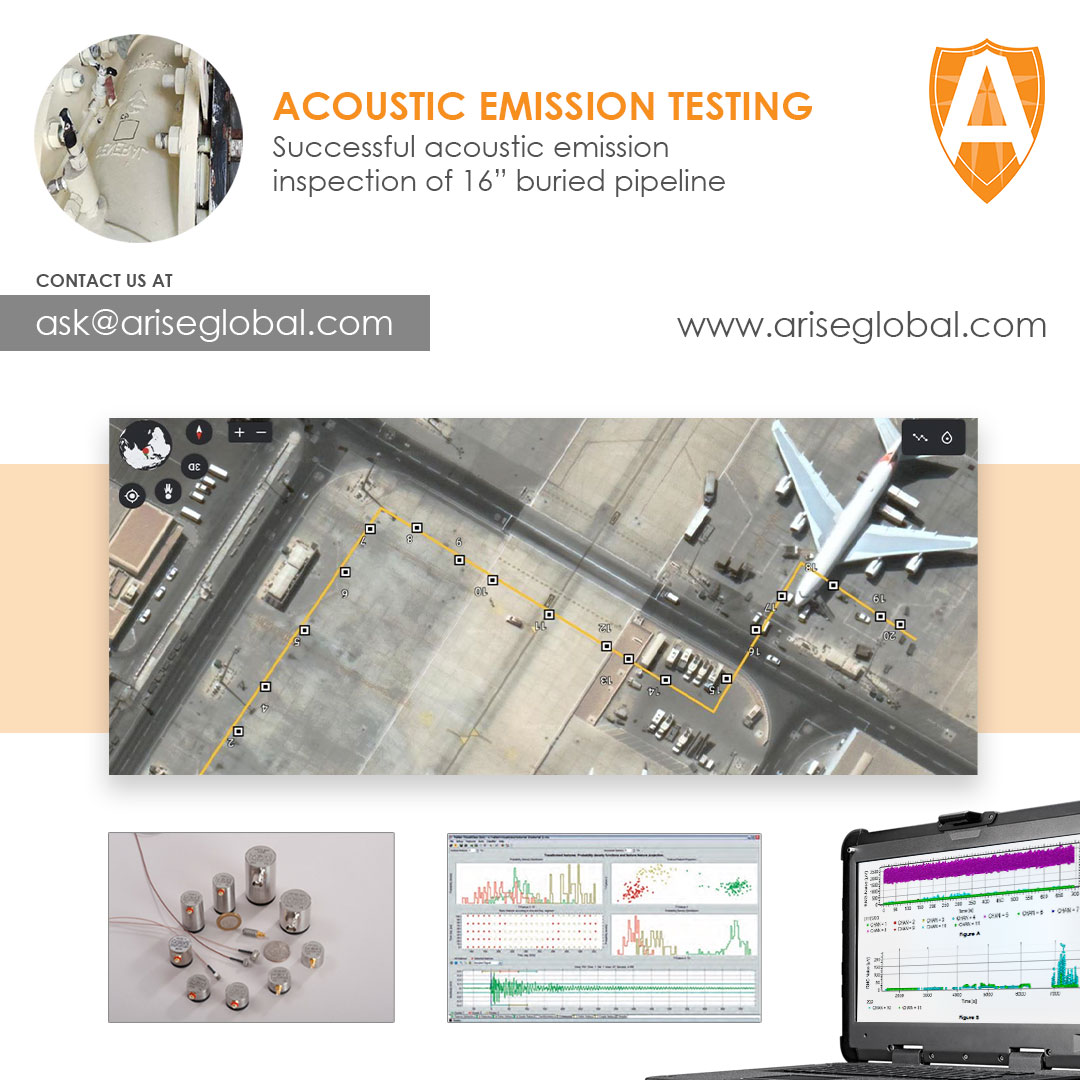
Another milestone achieved by Arise team for an aviation client! Arise team successfully carried out asset integrity assessment of a 16” buried pipeline, employing advanced Acoustic Emission inspection technique. This required NO excavations and was completed within a day! Site operations remained unaffected during inspection activities.
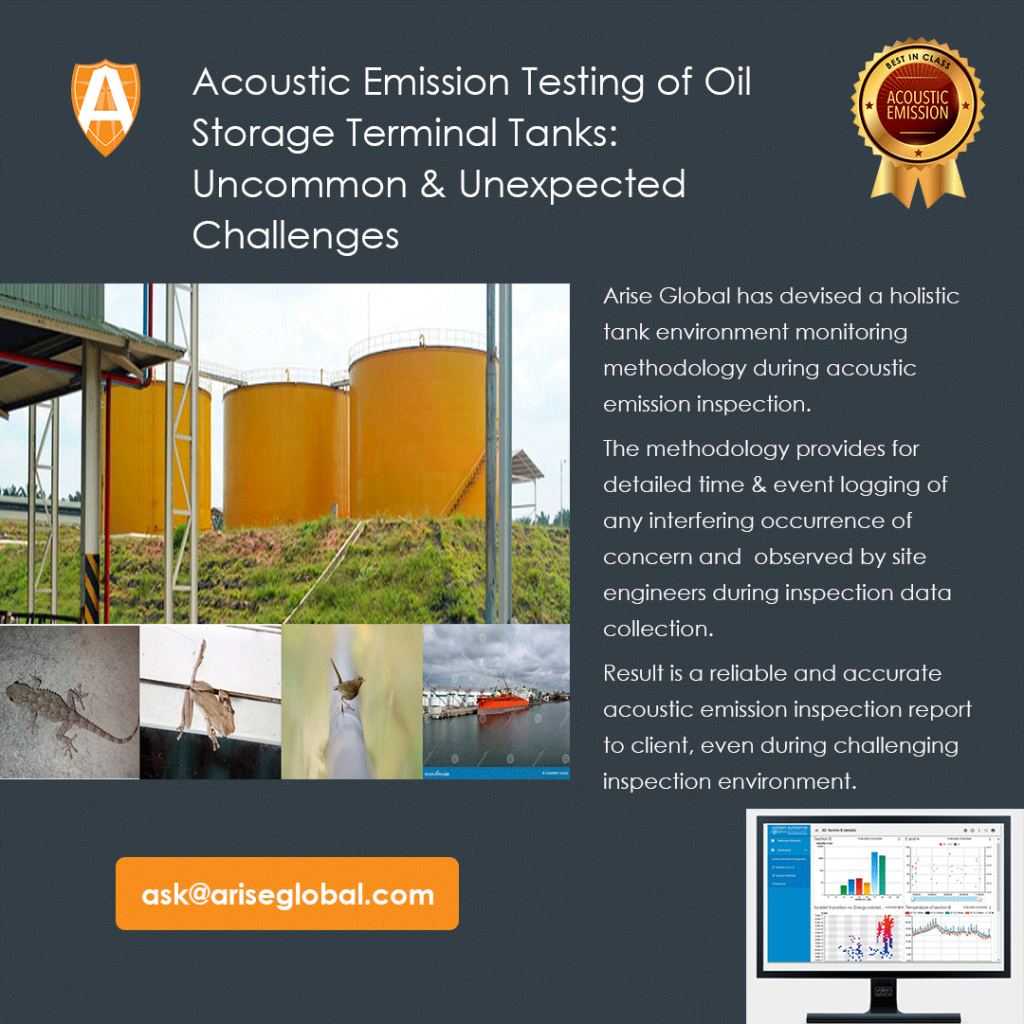
Fuel distribution terminals are generally located away from consumption centres. Major coastal fuel terminals are normally located next to fuel unloading jetty. Location of such remotely located storage tanks presents uncommon, unique and even unexpected challenges for acoustic emission inspection of storage tanks. As acoustic emission sensors are sensitive to external interferences, area around tank during data collection should be kept as quiet as practically possible.
However, even if all such precautions are taken, there may still be incidental sources of external disturbances, e.g., random vehicular or marine vessel movement, intense winds, flying aeroplanes etc. At times, very uncommon disturbances may arise from movement of birds, lizards, frogs etc. on tank roof, shell, annular plates, connected pipelines etc., which complicates filtering of such sporadic and unexpected interference signals from overall tank inspection data to mitigate possibility of any false calls.
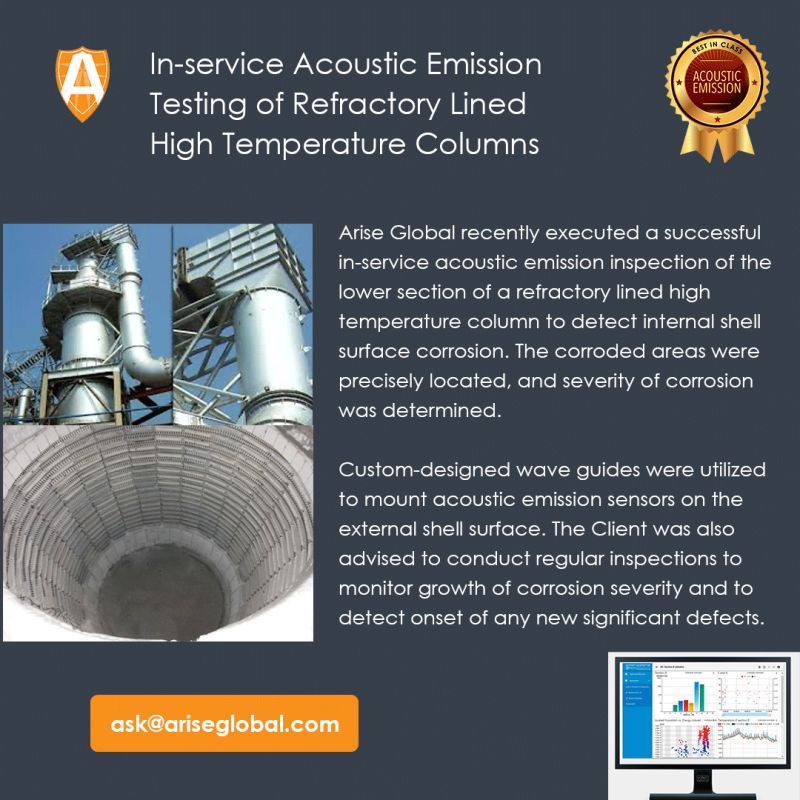
High temperature refractory lined column shells are susceptible to corrosion and Stress Corrosion Cracking (SCC) due to degradation of refractory material over time. The development of cracks in refractory allows high temperature column contents to come in contact with internal shell surface. Depending on extent and frequency of thermal cycling as well as operating high pressure, these exposed shell surfaces may also be prone to SCC.
In-service evaluation of such internal shell surface defects from high temperature external shell surface involves major personnel safety, cost and time implications. Such inspections must be done regularly, covering extended inspection areas once progressive refractory degradation of the column has been identified.

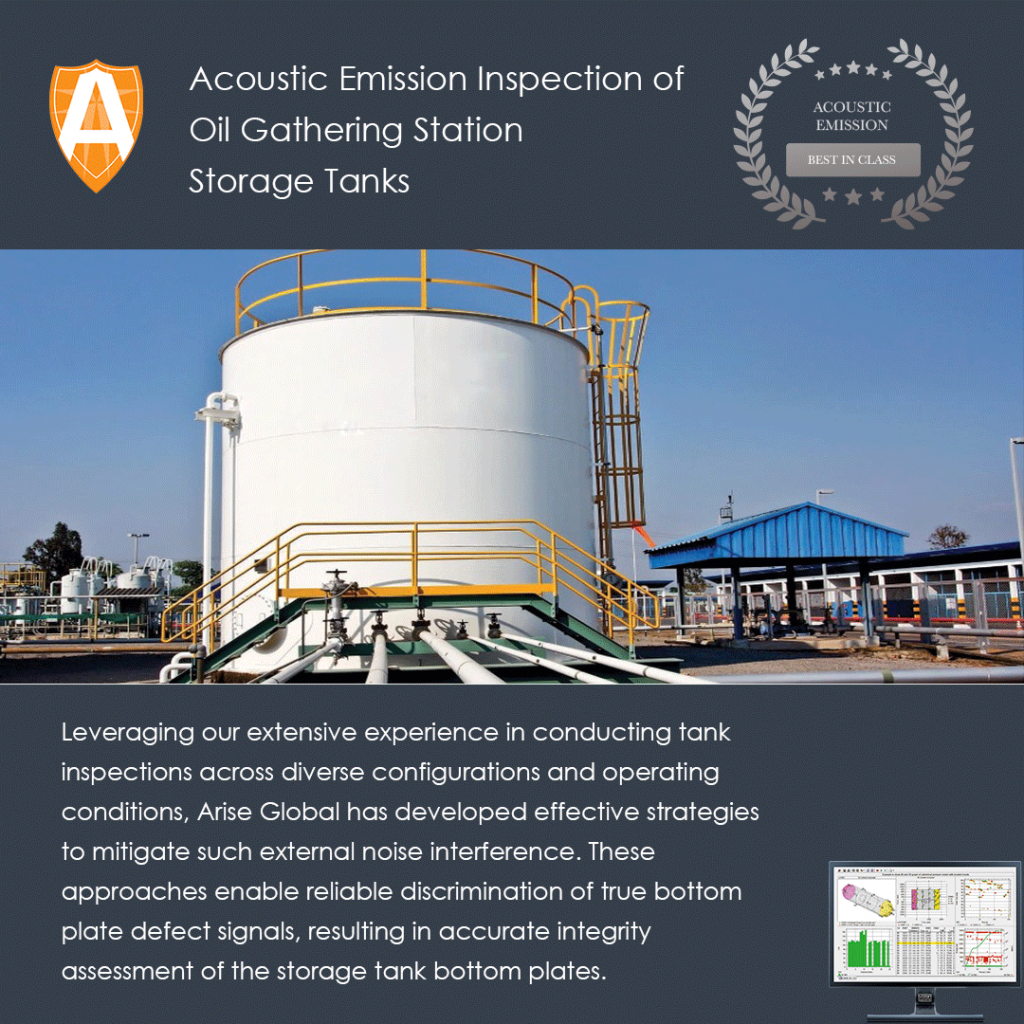
Onshore oil gathering stations collect wellhead fluids (oil, gas, and water) from multiple production wells. After separation of the fluid components, the oil is stored in multiple shipping tanks for onward transportation.
A key peculiarity of these tanks is that they may be interconnected directly, as well as indirectly through the inlet and outlet pipelines of adjacent shipping tanks. This configuration presents a significant challenge for acoustic emission inspection of tank bottom plates, as external noise sources increase when one or more tanks are in operation for oil transfer via the pump house.